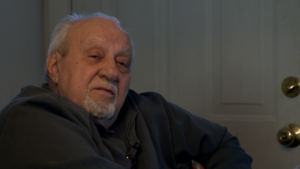
After A Half-Century Of Trying, Uncle Sam Finally Gets His Wish, Former Detroit Iraqi Godfather Lou Akrawi, Set To Be Deported To Baghdad This Week
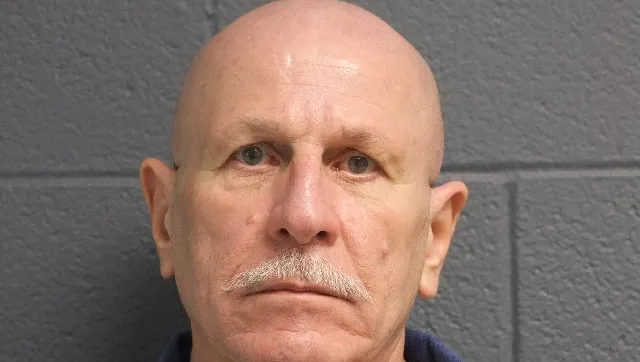
February 3, 2026 — The fact that he remains, almost six decades later, an enemy of the state in Iraq, and sending him back to his home country could very well be a virtual death sentence, apparently means nothing to the U.S. government under the second Donald J. Trump administration.
It appears to be the end of the line for former Detroit Middle-Eastern mob boss and geo-political revolutionary Lou Akrawi and his run as a firebrand immigrant-community leader in the United States, specifically Southeast Michigan. Following more than 50 years of fighting to stay in the U.S. and…….alive, from dodging attempts by Saddam Hussein’s Ba’ath Party to kill him in the 1970s and 1980s for being a political dissident to multiple futile U.S. government-led efforts to put him in prison for the rest of his life. Akrawi, 78, and stricken with Parkinson’s Disease, is scheduled to be put on a commercial flight to Baghdad Wednesday and dropped back into his homeland, most likely with a murder contract still on his head from his days as a young man in the late 1960s opposing Saddam Hussein and the then brand-new Baathist regime. None of Akrawi’s relatives are still living in Iraq and Akrawi himself hasn’t stepped foot in Iraq in 58 years. Akrawi hasn’t been in trouble with the law in the U.S. since the early 1990s and for the past decade, when he wasn’t battling deportation, he’s lived quietly on a rural property in Detroit’s far west suburbs, tending to his garden, prized mastiff dogs and reconnecting with his five sons and taking care of his grandchildren.
Akrawi’s roots trace back to the once-burgeoning Iraqi-Christian community in Baghdad and the country’s socialist movement that challenged the Ba’ath Party for power throughout the 1960s. The Muslim Baathists drove most of that Iraqi Christian community out of the region and most of them wound up immigrating legally to the U.S. and settling in Detroit, Michigan in hopes of finding work in the area’s increasingly-dwindling automotive-manufacturing job market of the Nixon, .Ford and Carter White House eras. When employment at the car plants dried up, going instead overseas for cheaper labor and the nation’s economy went into a tailspin, a slice of the Iraqi Christians (known locally as Chaldeans; KAL-DE-ON) who lost jobs in the auto factories turned to the streets and a life of crime to find their own piece of the American dream. The most infamous of those men is undoubtedly Lou Akrawi, fierce and defiant to law enforcement and political and underworld rivals alike as he was instrumental in building Metro Detroit’s now flourishing Iraqi Christian community from the ground up and its meager beginnings on Detroit’s near Northwest side. Injured working the line at Chrysler and out of a job, Akrawi accepted muscle assignments from the Detroit Italian mafia’s Giacalone crew and soon founded his own organization. Akrawi’s criminal network grew to control all gambling, extortion and drug rackets in the city’s “Little Baghdad” neighborhood on 7 Mile Road and eventually absorbing territory in the Westside and Eastside suburbs.
Crafting a reputation as Detroit’s “teflon don,” the outspoken, barrel-chested Akrawi beat seven straight state and federal cases, even getting acquitted in a 1991 RICO trial that tipped off the same week the U.S. declared war on Iraqi and began bombing Baghdad. His vast legitimate business portfolio was packed with interests in restaurants, nightclubs, real-estate investments, travel agencies, auto-body shops. insurance companies, coffee shops and convenient stores. In 1996, Akrawi was found guilty in Wayne County Recorders Court of second-degree murder in the accidental killing of 34-year Michael Cogborn, who got hit by stray bullets while in line at a grocery store in September 1993 and Akrawi-dispatched gunmen sprayed the store with automatic weapon fire in an attempt to kill the store’s owners. Hours earlier, Akrawi survived an assassination attempt at a coffee house. Akrawi’s Chaldean Mafia organization had been at war with an offshoot faction of the gang for the past five years. Swaggering, handsome and power-hungry Chaldean Mafia street boss Harry Kalasho, Akrawi’s nephew and surrogate son, was murdered in February 1989, with his homicide attracting considerable media attention, allegations of government and police corruption and accusations of surveillance tip offs to Akrawi and Kalasho’s adversaries on the afternoon of Kalasho’s slaying outside a lieutenant’s home in Northwest Detroit leaving a last-minute meeting.
Since being released from prison on his manslaughter conviction in 2016 after two decades behind bars, Akrawi has battled ICE efforts to boot him to Baghdad, first from ICE detention between May 2017 and December 2019 and more recently, after being detained last summer. Akrawi was involved in a business-deal negotiation that was never consummated with President Donald Trump in 1987; back then, Trump was just a loud, flashy New York City real estate mogul and tabloid fixture. As Trump vigorously campaigned among Metro Detroit’s Middle Eastern community in his 2016 election victory, winning the community’s support that ultimately moved the whole election in his favor , Akrawi actively campaigned against Trump in the same community, telling his fellow Middle Eastern immigrants that if Trumps finds his way to the White House, he will start deporting all of them. The message proved prophetic for Akrawi and thousands of Iraqis, Syrians, Lebanese like him. Even though the Ba’ath Party doesn’t exist any longer, many members of the brutal regime are still prevalent in modern-day Iraqi politics.
Taking part in a failed May 1968 political coup and botched assassination attempt of then-Iraqi vice president Saddam Hussein, Akrawi became a marked man before his 21st birthday, forced to take his family and flee Hussein’s Ba’ath empire and continued to have to look over his shoulder until Baghdad was toppled and Hussein was captured by U.S. military forces in 2003. Hussein hunted Akrawi for decades per federal intelligence reports declassified after Baghdad fell, sending Ba’ath Party agents to Michigan and other U.S. states to carry out murder contracts on Akrawi on at least three occasions prior to being deposed as the president of Iraq. Akrawi spent much of the 1970s and 1980s holding protests and demonstrations across the U.S. imploring the White House to break ties with Hussein and his oppressive regime, something it eventually did in 1990 and forthcoming the Desert Storm operation that blocked Hussein’s occupation of oil-rich neighbor Kuwait.
Hussein was given the Key to the City of Detroit in 1980 on the heels of Hussein donating millions of dollars to Detroit’s Iraq Christian community to make amends for the Ba’ath Party’s previous treatment of them in their homeland. During the ceremony, Akrawi led a protest where he marched to Detroit’s City Hall with Hussein masks adorned to the muzzles of his two pit bulls next to him heading the rally. NSA and U.S. Secret Service investigative materials includes the description of a U.S. Military raid of one of Hussein’s palaces in Baghdad in the wake of his ouster that uncovered video of the 1980 Detroit City Hall protest and other Iraq intelligence gatherings on Akrawi’s dealings and whereabouts in a private storage room attached to the palace’s master bedroom suite.